Ranked here by how well each suits gold jewellery, which is a different question from the ranking on our home page.
Read this before you buy anything There are two completely different jobs hiding behind one search. Finding gold rings and coins is ordinary detecting and any machine below will do it. Finding natural gold - flakes and small nuggets - needs a high-frequency prospecting detector and, far more importantly, ground that actually contains gold. Buying the second kind to swing over a local park is spending money on the wrong problem.
Where the gold you will actually find is
Lost jewellery is the realistic target for almost everyone. It sits in the places people take rings off or lose them: swimming beaches, sports fields, parks, picnic areas, the strip of dry sand where towels go. It is shallow, it is recent, and it is gold that somebody once bought - which is why an ordinary detector finds it.
Natural gold is somewhere else entirely, in geology that prospectors already know about. No detector puts it under your coil.
The two things that decide a jewellery machine
First, how it copes with wet salty sand and mineralised soil - because that is where the rings are, and single-frequency machines lose depth and start chattering there. Multi-frequency handles it, and it now exists at entry prices, which is the single biggest change in this category in years.
Second, and this is the part people get wrong: gold reads close to aluminium. A gold ring frequently shows up in the same conductivity range as a pull tab. If your machine is set to discriminate out pull tabs, it is discriminating out rings. There is no setting that separates them reliably - you dig the range and accept the trash.
The rule that finds rings Do not reject the pull-tab range. You will dig more junk. Everyone who finds gold jewellery digs more junk. That is the trade, and no machine removes it.
Why frequency is the dividing line for natural gold
Lower frequencies see further on large, highly conductive targets like silver. Higher frequencies are far more sensitive to small, low-conductivity targets - which is what a gold flake is. General-purpose detectors sit in the middle on purpose, because that is the right compromise for coins, jewellery and relics.
Dedicated prospecting machines run much higher. That is not marketing: it is the whole reason they exist, and it is also why they are worse than the machines above at everything except small gold.
What we would actually tell a beginner
Buy a good all-rounder, learn it on a beach or a park, and stop discriminating out the range where rings live. If you later find you have access to genuine gold-bearing ground, that is the moment to look at a prospecting machine - not before.
These are the specialist machines the hobby actually uses for small natural gold. They fall outside what this site compares - our scoring is built around general-purpose beginner machines - so we are not scoring them. The figures below are the manufacturers' own.
Fisher Gold Bug 2
not scored here 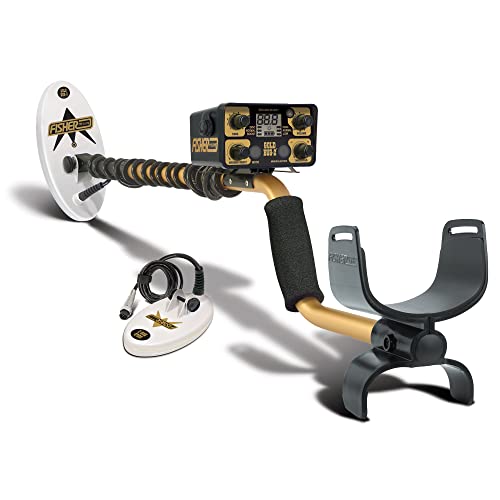
Runs at an extremely high frequency, which is what makes it sensitive to the small, low-conductivity gold that ordinary machines walk past. That same sensitivity makes it a poor general-purpose detector - it is a specialist tool, not an upgrade.
- Operating frequency
- 71 kHz
- Coil
- 6" elliptical, plus second coil in this bundle
Check price on Amazon
Fisher Gold Bug Pro
not scored here 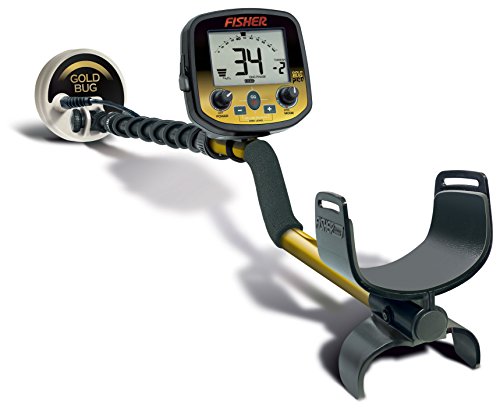
A more forgiving middle ground: high enough frequency for small gold, but with tone discrimination that makes it usable for coins and relics too. The reasonable first step if you want one machine that leans towards gold.
- Operating frequency
- 19 kHz
- Discrimination
- Variable-break tone system
Check price on Amazon